7 Reasons Why Women Who Lost Weight After 45 Are Adding This Serum to Protect What the Scale Cannot


She did the hard thing. She committed to the medication. She changed her habits. She watched the number on the scale drop week after week.
And then she looked in the mirror.
Everyone around her says she looks amazing. Her doctor is thrilled with her bloodwork. Her clothes fit for the first time in years. By every measure that other people can see, she won.
But the mirror tells a different story. Her face changed. Not in the way she expected. The volume that used to give her face structure left with the weight, and what remained underneath was not what she thought would be there.
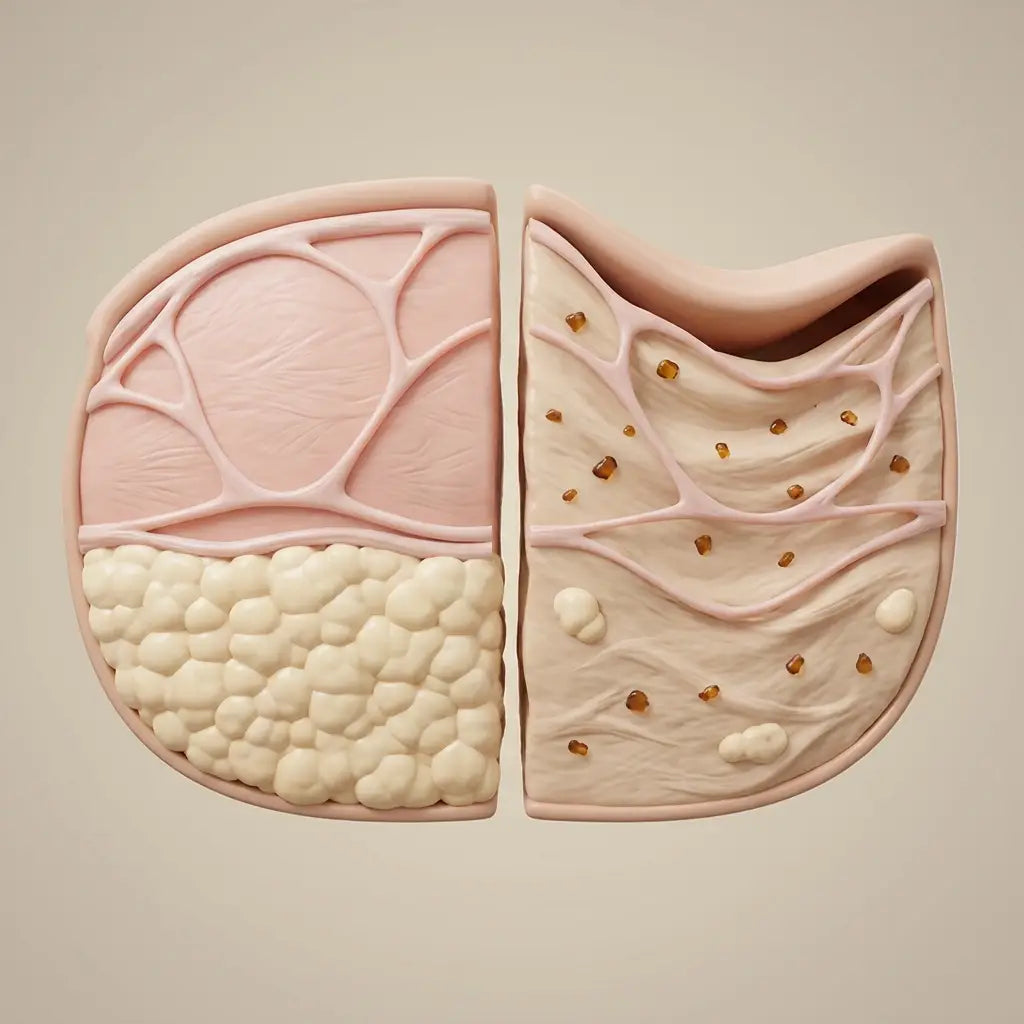
Here is the part nobody explains: facial volume was not the structure. It was the padding. And the actual structure underneath, the collagen holding the jawline and neck in place, had been quietly weakening for years. After menopause, iron accumulates in skin tissue (42% more ferritin, per Pelle et al., 2013), triggering oxidative damage to collagen from inside the dermis. While the facial volume was still there, it hid the damage.
The weight loss did not cause the change. It revealed what was already happening underneath.
1. The Volume Was Not the Structure. It Was Covering Up the Damage.
This is the reframe that changes everything.
She thinks the weight loss caused her face to change. It did not. The weight loss removed the padding that was hiding a structural problem that had been building since her periods stopped.
Collagen is the structure. Volume is the cushion over the structure. When the cushion is removed, whatever condition the structure is in becomes visible.
If the collagen was intact, removing volume would have revealed a leaner but defined face. Instead, it revealed a face without enough structural support.
Snap-Back was designed to help defend that collagen against the iron-driven oxidative damage that weakened it in the first place.

2. "Lift Weights" Is Not a Jawline Solution. Here Is What Is.
She has heard this advice a hundred times. Build muscle. Do face yoga. Get fillers. Go to the gym.
Muscle is not collagen. Facial exercises do not reach the dermis. Fillers replace volume but do not address why the structure underneath gave way.
The issue is not that she lost volume. The issue is that the collagen scaffolding under that volume had been degraded by iron accumulation for years, and nobody was addressing it.
Snap-Back targets the iron-driven damage to that scaffolding. Not volume replacement. Not muscle building. Structural defense at the layer where the breakdown is happening.

3. Her Doctor Is Happy With Her Numbers. Her Mirror Is Not. Both Can Be True.
She is healthier. That is real. Her blood pressure improved. Her A1C dropped. Her joints feel better. She should be proud of what she accomplished.
And her face changed in a way she did not anticipate. That is also real.
These two things are not in conflict. One is a systemic health victory. The other is a localized tissue issue that the weight loss revealed but did not cause.
She does not have to choose between being grateful for her health and wanting to address her skin. She can do both.
4. This Is Not a Filler. It Is Aimed at Why the Structure Weakened.
Fillers add volume back. They are padding over the problem. For some women, that is the right choice.
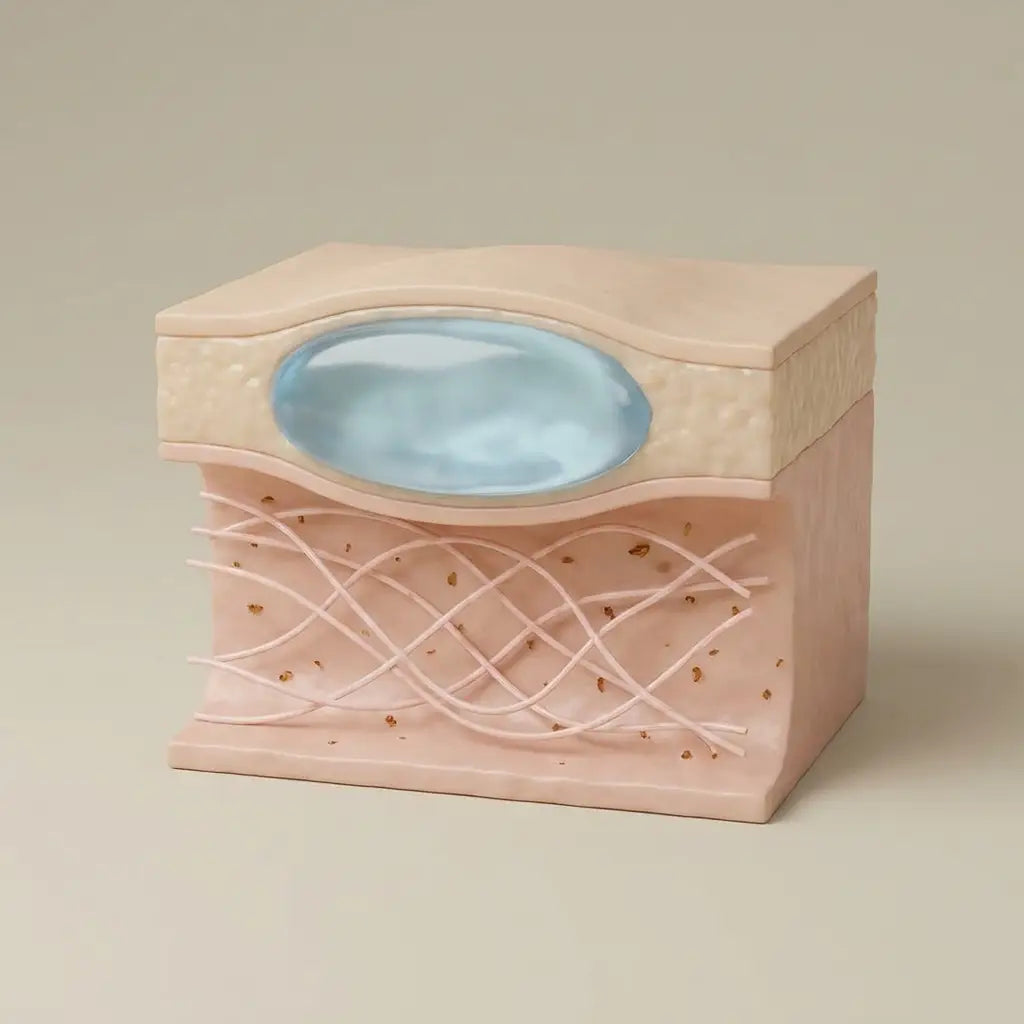
But fillers do not address why the collagen weakened in the first place. If the Fenton reaction is still running in the dermis, if iron is still generating free radicals that degrade collagen and elastin, then the filler is sitting on top of an ongoing process.
Snap-Back was designed to help defend collagen against that ongoing oxidative damage. It does not replace volume. It is aimed at preserving and protecting the structural layer that holds everything up.
One is cosmetic. The other is aimed at the biology.

5. The Research Explains Exactly Why This Happened to Her Face
It is not random. It is not genetics. It is chemistry.
Pelle et al. (2013), Journal of Cosmetic Science: post-menopausal skin carries 42% more ferritin and 45% less antioxidant capacity. Measured in tissue biopsies.
Huang, Alavi, and Chen (2026), International Journal of Women's Dermatology: ferro-aging as a described paradigm for iron-driven structural skin decline after menopause.
The iron was accumulating in her skin while her periods were stopped. The volume was hiding the resulting collagen damage. The medication worked exactly as intended. The skin issue was a separate process running underneath.
6. One Pump. 60 Seconds. It Fits the Routine She Already Has.
She is already managing a medication schedule. She is already adjusting her diet. She does not need another complicated protocol.
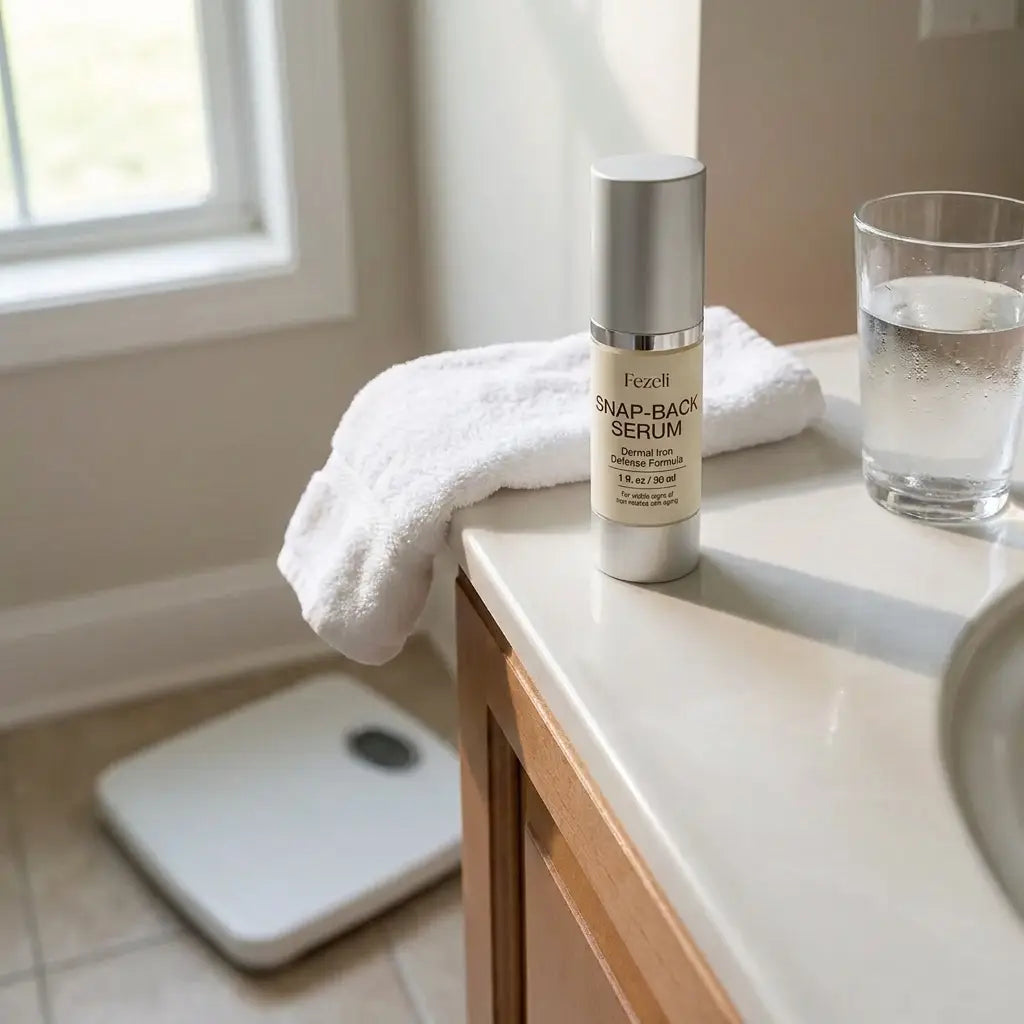
Snap-Back is one pump applied to the jawline, neck, and lower face before bed. It layers under moisturizer. It does not interact with GLP-1 medications. It is a topical antioxidant defense serum.
Sixty seconds added to her evening. That is it.
7. If Her Jawline and Neck Do Not Look Firmer in 60 Days, She Gets Every Dollar Back.
She already took one leap of faith with the medication. That one paid off. This one comes with a guarantee.
Snap-Back offers a 60-day money-back guarantee. Use the full bottle. If she does not see or feel a difference in her jawline, neck, or lower face, she gets a full refund. She keeps the bottle either way.
She won the weight battle. Now she can address what the weight was hiding, risk-free.

$141 in welcome gifts with your order
GET 49% OFF FOR A LIMITED TIME ONLY!
This bundle deal is in high demand and inventory is limited.
Check Availability →Try it today with a 60-Day Money Back Guarantee!
This is an advertisement and not an actual news article, blog, or consumer protection update.
This website promotes products sold by Fezeli. The owner has a monetary connection to the products advertised. Photographs used on this site are the brand's material or of actual product users.
Individual results may vary. These statements have not been evaluated by the FDA. This product is not intended to diagnose, treat, cure, or prevent any disease. Patch test before use. If you have a health condition or are undergoing treatment, speak with your doctor before starting any new product.
© 2026 Skin Health Weekly. Skin Health Weekly does not provide medical advice, diagnosis, or treatment.