7 Reasons Why Women Who Spent Thousands on Skin Tightening Are Adding This $49 Serum to Their Protocol


She can tell you the exact dollar amount. To the penny.
Three rounds of RF microneedling. Ultherapy. Sculptra. A microcurrent device she uses religiously. Retinol since her 40s. Professional-grade vitamin C. Maybe even a consult for a lower facelift she decided not to book yet.
She is not a reckless spender. She researches every treatment. She compares providers. She reads clinical papers before she books. She asks the right questions.
And the results have been... marginal. Maybe 15% improvement. Maybe less. Never the jawline she is actually working toward. She has started to wonder if it is her. If her skin just does not respond. If she waited too long.
It is not her. And she did not wait too long. Every single treatment she has tried was aimed at collagen. Rebuild it, stimulate it, inject something to replace it. Not one of them was aimed at the thing that keeps breaking it down.
After menopause, iron accumulates in skin tissue (42% more ferritin, per Pelle et al., 2013). That iron triggers the Fenton reaction, generating free radicals that damage collagen and elastin from inside the dermis. Her devices rebuild. The iron tears down. She has been running on a treadmill.
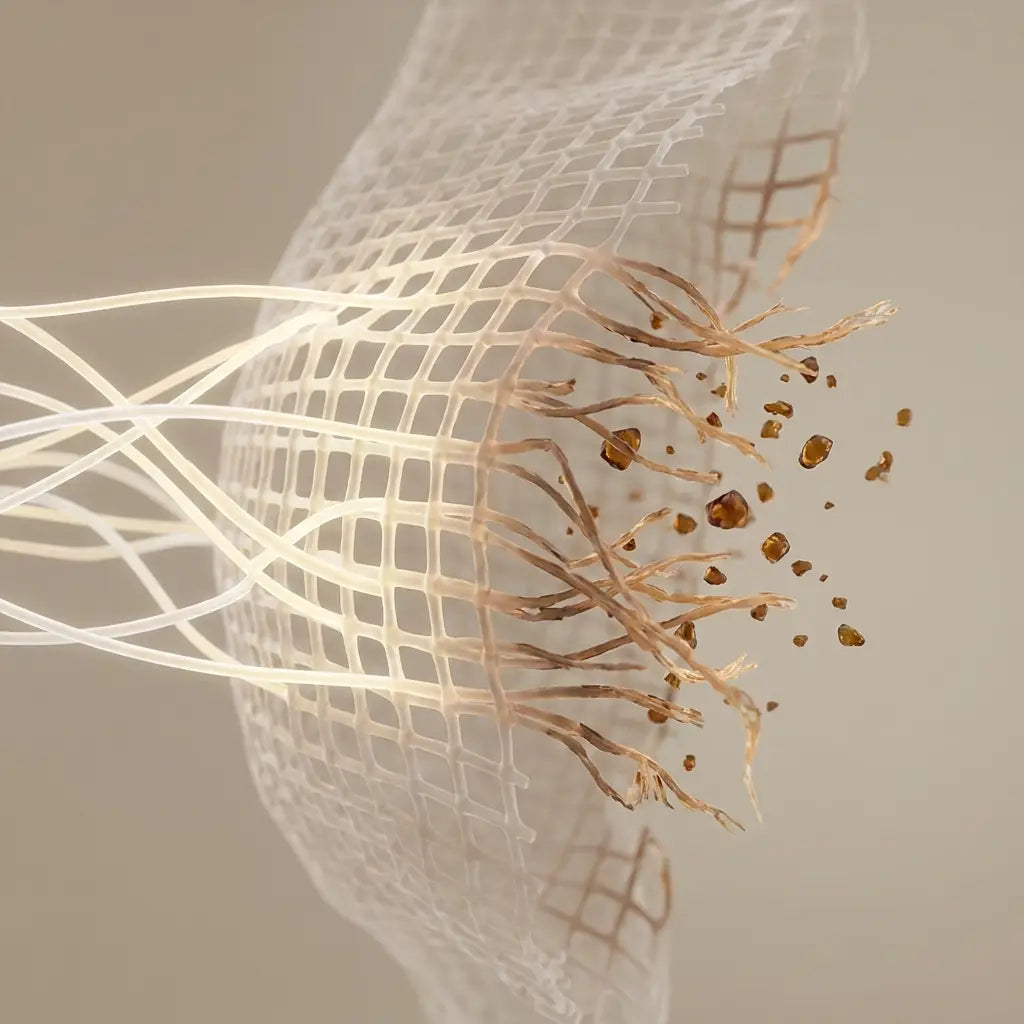
1. Every Device She Owns Rebuilds Collagen. None of Them Stop What Keeps Breaking It Down.
RF microneedling creates controlled micro-injuries to trigger collagen remodeling. Ultherapy uses focused ultrasound to stimulate deep collagen. Sculptra triggers neo-collagenesis through poly-L-lactic acid. Microcurrent tones the muscles sitting on top of collagen.
Every one of these is a build intervention. They are all aimed at the same side of the equation: make more collagen.
None of them address the other side: stop what is degrading collagen.
She rebuilds. The iron tears down. The net result is marginal improvement despite thousands of dollars in treatment. Snap-Back is designed to help address the tear-down side. It does not replace her devices. It is the piece that was missing from the protocol.

2. The Math Does Not Work Until She Addresses the Leak
She is an ROI thinker. So here is the ROI problem.
If collagen degradation from iron-driven oxidative damage is continuous, and collagen rebuilding from devices is periodic (one treatment every 4 to 6 weeks), then between treatments the iron keeps degrading what the device just built.
The net gain is the difference between what the device rebuilt and what the iron destroyed before the next session. That is why her results plateau. That is why the third session did not produce dramatically more improvement than the first.
Snap-Back is a daily-use serum. It is designed to help defend collagen against oxidative iron damage every day, not every 4 to 6 weeks. It changes the math by addressing the daily degradation her periodic treatments cannot reach.
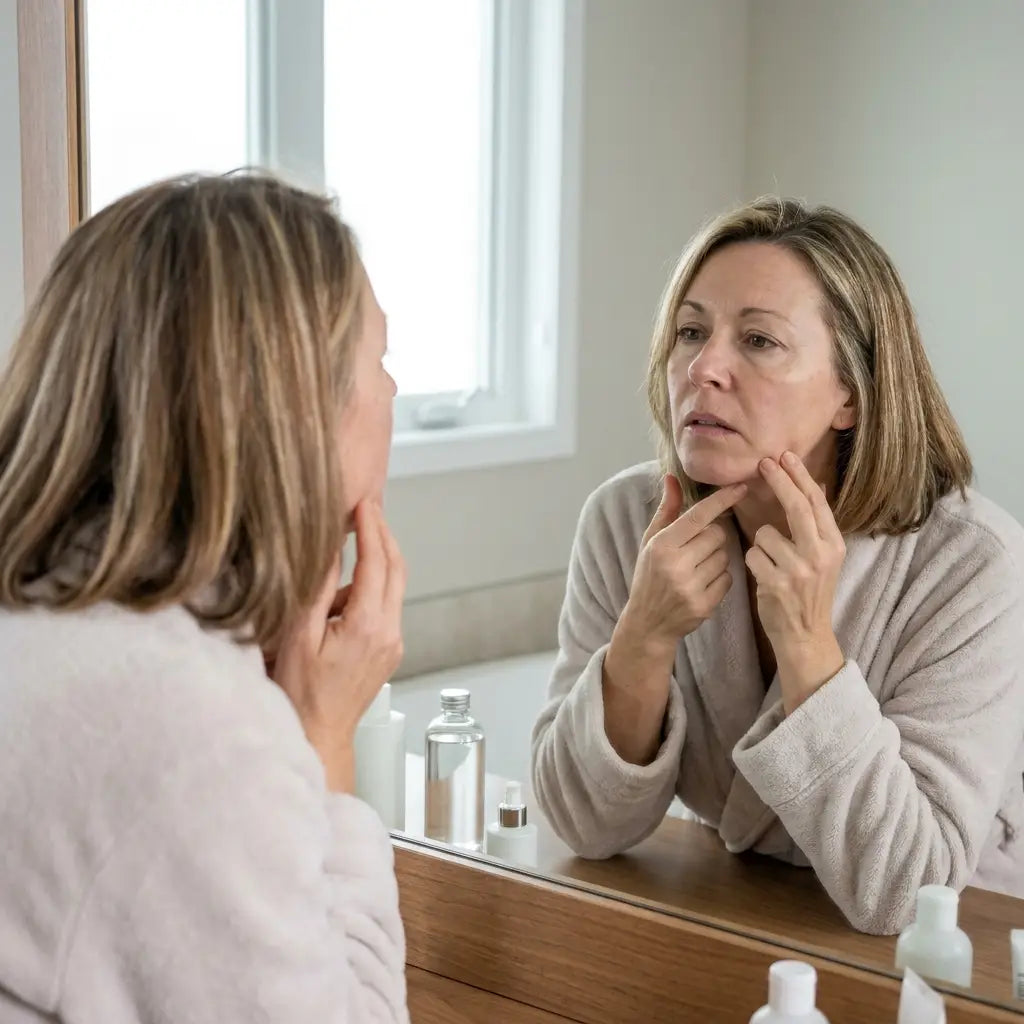
3. She Is Not Crazy. The Treatments Did Work. The Results Just Did Not Hold.
She saw something after the first session. A subtle tightness. A slight lift. It was real.
And then over the next few weeks, it faded. Not all the way back. But enough that she booked another session. And another. Each one producing slightly less noticeable improvement than the last.
She is not imagining this. The treatments are stimulating collagen. The collagen is being produced. And then it is being degraded by the same iron-driven oxidative process that was running before the treatment.
The device is working. The results do not hold because the environment the new collagen is being built into is hostile to collagen. Snap-Back is designed to help make that environment less hostile.
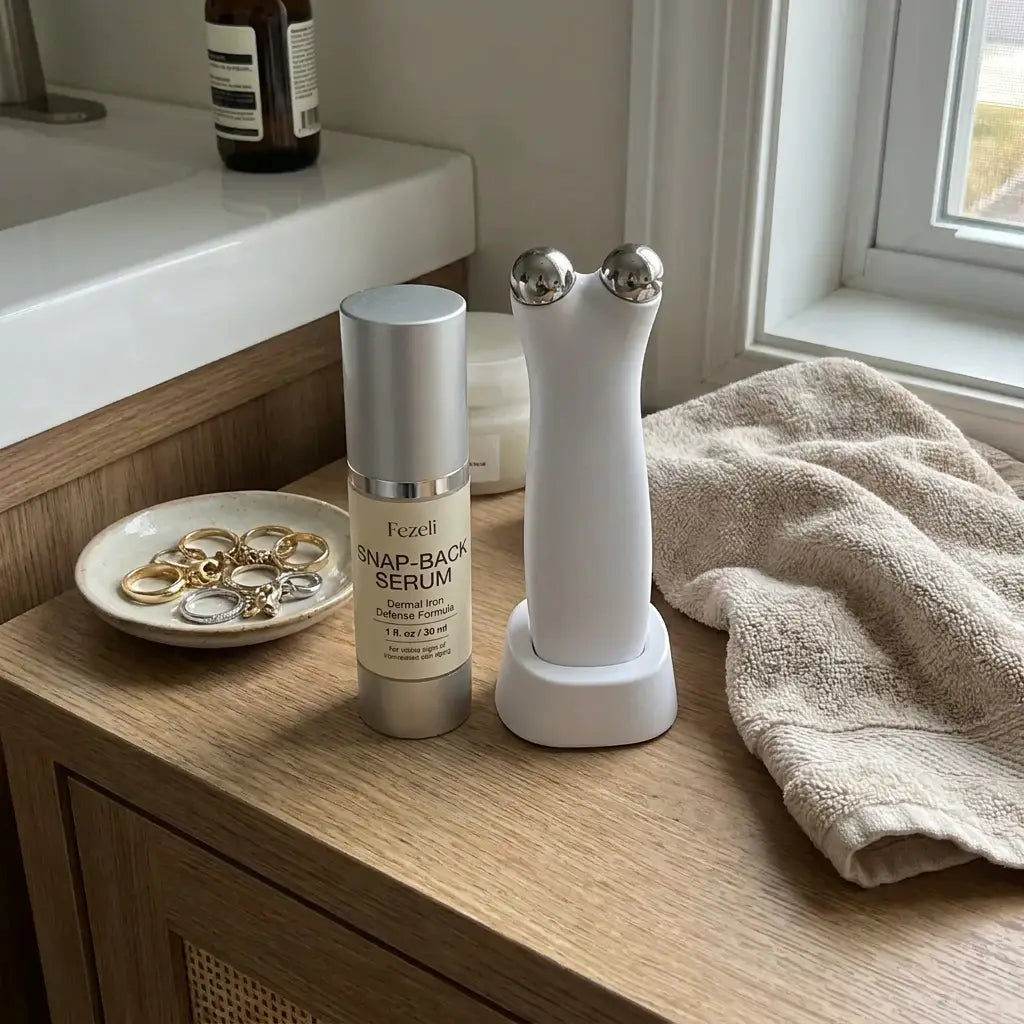
4. $49 vs. $5,950. And Only One Comes With a Guarantee.
RF microneedling: $400 per session, three sessions recommended. Ultherapy: $2,000 to $4,000. Sculptra: $800 per vial, two vials minimum. Microcurrent device: $350.
None of them come with a money-back guarantee. If the results disappoint, the money is gone.
Snap-Back costs less than a single microneedling session. It comes with a 60-day money-back guarantee. Use the full bottle. If her jawline, neck, and lower face do not look or feel firmer, she gets every dollar back. She keeps the bottle either way.
She has spent thousands without a safety net. This one has a safety net.

5. The Research Explains Why Her Devices Plateaued
Pelle et al. (2013), Journal of Cosmetic Science: post-menopausal skin carries 42% more ferritin and 45% less antioxidant capacity than pre-menopausal skin.
That 45% drop in antioxidant capacity is the key number for her. It means the skin's natural ability to neutralize iron-generated free radicals has been cut nearly in half. Every device she uses is building collagen into an environment with half the protection it needs.
Snap-Back was formulated to help restore antioxidant defense in skin affected by iron accumulation. Not to replace her devices. To change the environment they are building into.
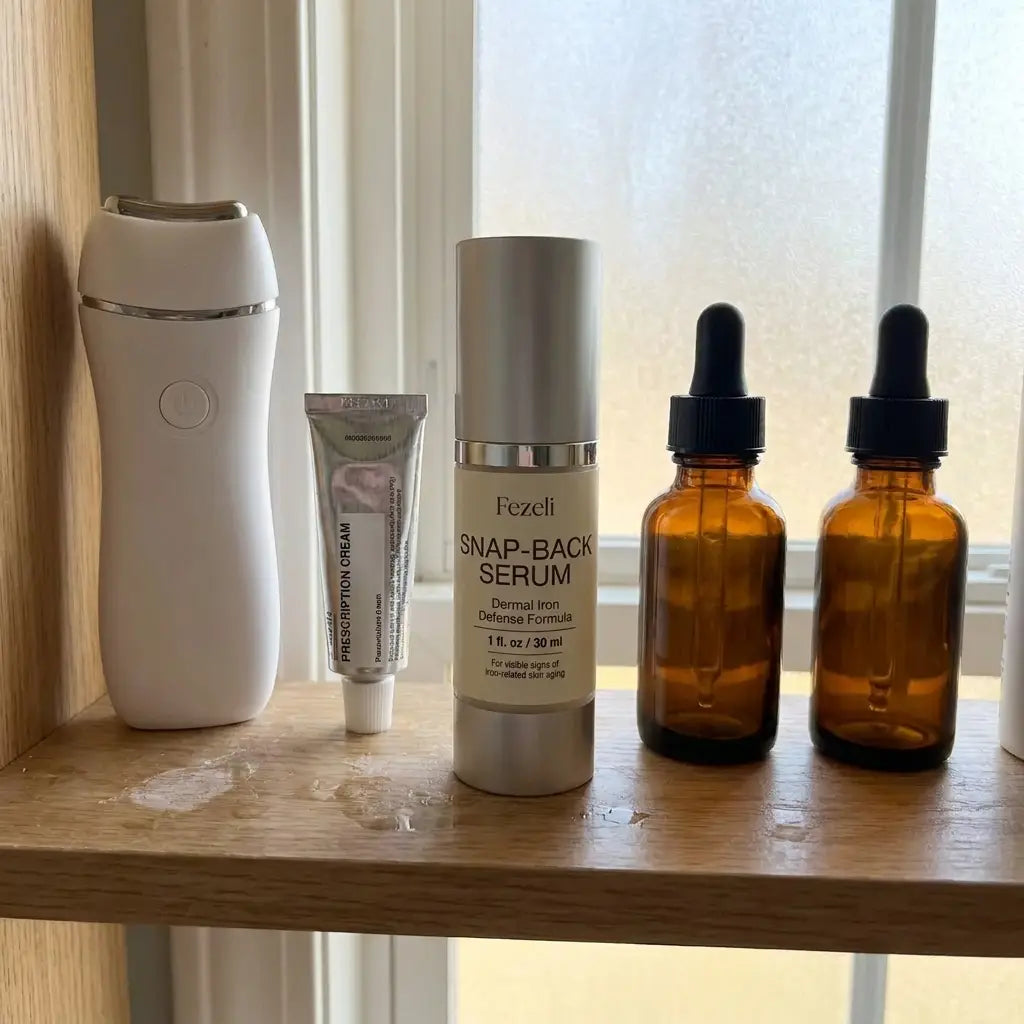
6. It Stacks With Everything She Already Uses
She does not have to stop anything. Snap-Back is not a replacement for RF, Ultherapy, Sculptra, retinol, or vitamin C. It is the layer underneath all of them.
One pump. Jawline, neck, lower face. Before bed. Under moisturizer. It layers with retinol, with peptides, with whatever else she is running.
Think of it as the defensive layer her offensive treatments have been missing. Sixty seconds added to her evening. That is it.
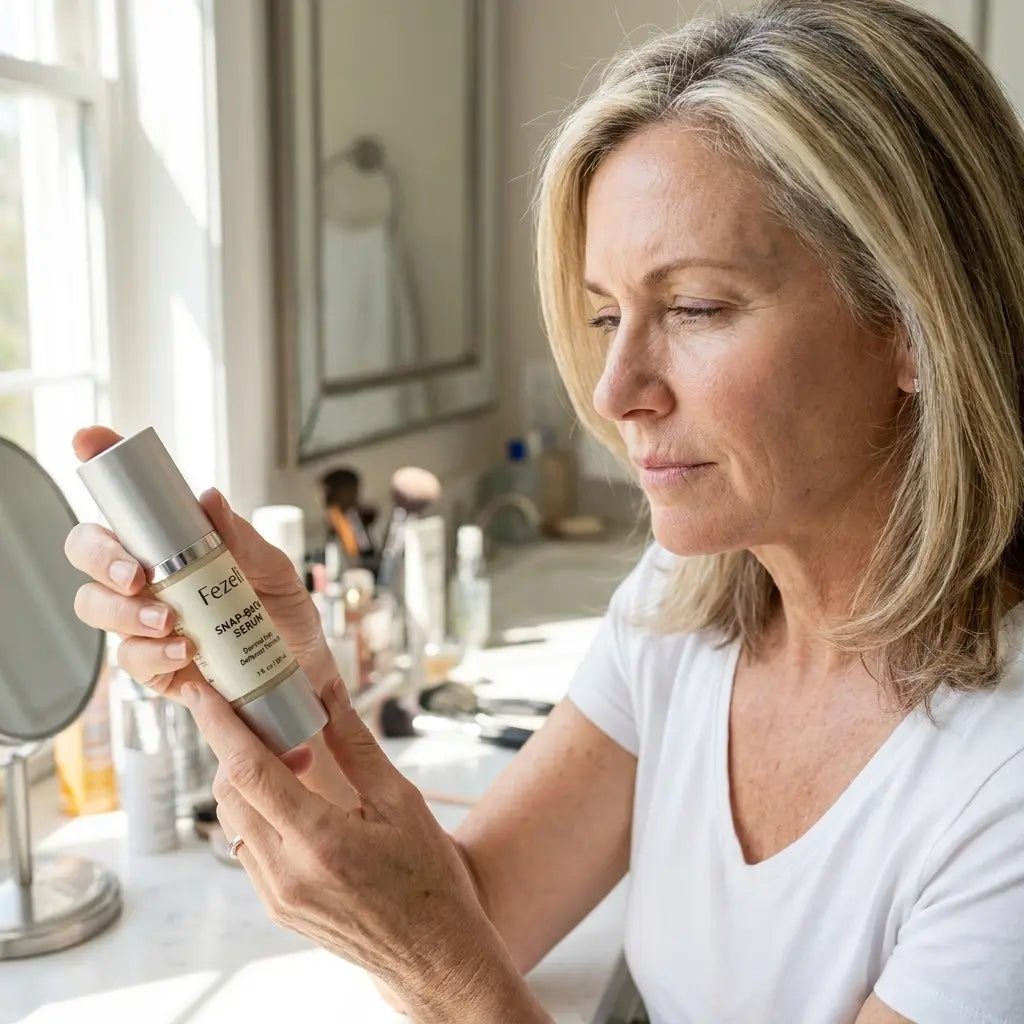
7. She Has Earned the Right to Be Skeptical. The Guarantee Covers It.
She has spent thousands and been disappointed. She is not going to fall for another promise.
Good. Do not believe the promise. Believe the guarantee.
60 days. Full bottle. If the jawline, neck, and lower face do not look or feel firmer, every dollar comes back. She keeps the bottle either way.
She has never gotten that offer from a medspa. She is getting it now.

$141 in welcome gifts with your order
GET 49% OFF FOR A LIMITED TIME ONLY!
This bundle deal is in high demand and inventory is limited.
Check Availability →Try it today with a 60-Day Money Back Guarantee!
This is an advertisement and not an actual news article, blog, or consumer protection update.
This website promotes products sold by Fezeli. The owner has a monetary connection to the products advertised. Photographs used on this site are the brand's material or of actual product users.
Individual results may vary. These statements have not been evaluated by the FDA. This product is not intended to diagnose, treat, cure, or prevent any disease. Patch test before use. If you have a health condition or are undergoing treatment, speak with your doctor before starting any new product.
© 2026 Skin Health Weekly. Skin Health Weekly does not provide medical advice, diagnosis, or treatment.